
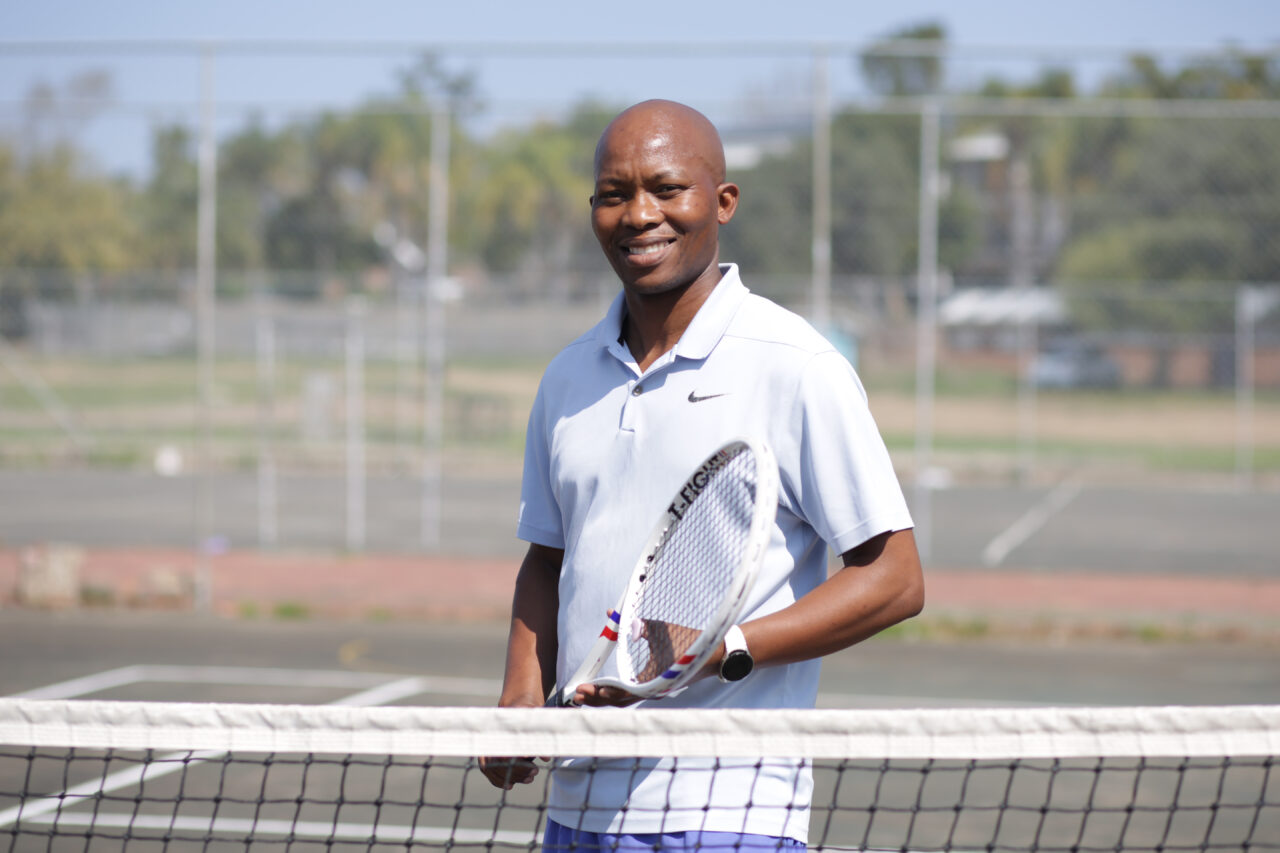
The University of Fort Hare’s tennis team continue to rack up the aces against the Eastern Cape’s leading tertiary institutions.
The ladies barely broke a sweat in seeing off the challenge of Walter Sisulu University’s women’s side when they met in a series of matches at the latter’s Butterworth campus on Saturday.
The 5-1 scoreline told the story of their dominance, while the men were also able to hold their heads high after winning three of their six matches.
Overall, the team took the rubber against their great rivals 9-4.
Due to limited courts being available at the facility, all matches were played over one extended set of nine games.
The victory over WSU is another major scalp for Fort Hare, who also demolished Rhodes on their home turf in Makhanda earlier this year.
Fort Hare tennis coach Thabo Gwegwana admitted he had been “a little nervous” coming into the weekend’s fixture.
“WSU is a big university where they can select players from four campuses. You’re up against the best of the best of the best of the best,” he said.
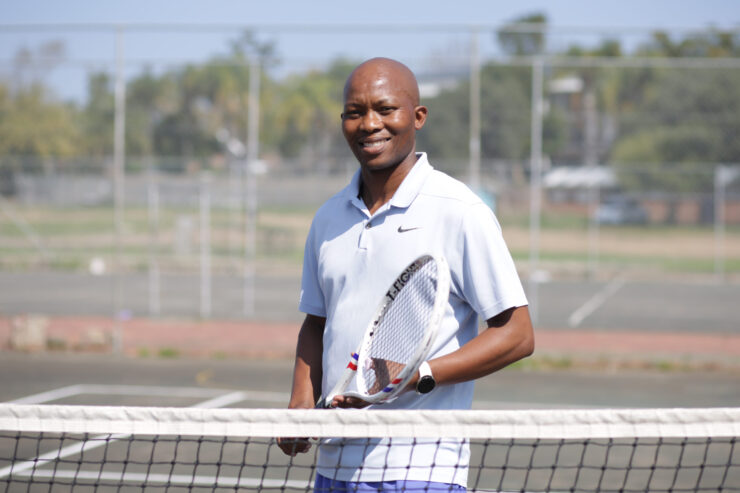
Fort Hare tennis instructor Thabo Gwegwana inspired his charges to overall victory against WSU in Butterworth last weekend. Photo: Full Stop Communications
Another stumbling block was the fact that Fort Hare’s East London-based players had only started training in earnest at the beginning of the second semester.
Accordingly, he decided to select his entire team from the Alice contingent and this calculated risk paid off handsomely.
Gwegwana has been instrumental in reviving the sport at the university. When he returned to his alma mater as a coach, the tennis programme was on life support.
A massive recruitment drive by his assistant coach at the time, Qhayiya Vellem, enabled him to identify players with the potential of competing at a higher level.
The progress was already evident at the end of 2024 when Fort Hare featured in the University Sport South Africa tournament for the first time in 10 years.
Despite having a group of largely untested athletes, they rallied and scrapped for every point to secure sixth overall in the C section.
The importance of that result was that it guaranteed them a slot at the 2025 event.
On that occasion, only 12 months after returning to the Ussa fold, they placed third to gain promotion to the B section.
The performance hit an emotional chord with Gwegwana, who had been a member of the self-same team who had won promotion to the second tier 11 years earlier.
Watching his charges repeat the dose was a special moment as he knew he only needed a small window of opportunity to turn skilled social players into competitive ones.
“I always say to my boss, ‘Just give me a chance’. I use the same approach with my students,” he explained.
“I tell them that I understand if they have never before touched a racquet. I say give me a chance and do as I say.”
Apart from the thrill of working their way up the national rankings, Gwegwana loves nothing more than seeing the joy the sport brings to first-timers.
He believes those moments are the foundation on which everything else is built.
It is a philosophy that can already be measured in results.